There was a relatively stable and conservative consensus about the place of Indian women among their fellow countrymen, which required little or no modification for use by right-wing, völkisch or fascist movements. The narrative is predictable and could probably be used more or less unchanged in a great many other countries and contexts. Whenever the mainstream of public opinion (and public opinion was mostly man-made) on the subject of women diverged, it was not due to an extreme right versus moderate conservative divide. Women were expected to be the custodians of the morals of the community and the nation; their actions, behavior and deportment embodied the notional virtues that were to exemplify the future collective. They were to be mobilized when necessary, making up numbers, but their activities and behavior were to be properly constrained within the realms of what male leadership considered appropriate (although there were plenty of women to police their fellow female activists). They were sent home, suitably demobilized, when they were not required. Their activities were expected, at times, to include the capacity for violence, described as "self-defence", but this was seldom for its own sake, as the "honor" of a woman was the honor of the community, however defined: religiously, as Hindu, Sikh, or Muslim, or as part of a völkisch national entity. This was brought home in a particularly brutal way during the violence surrounding the partition of India in 1947–48, when men in the community slaughtered their women rather than let them fall into the hands of other communities and thereby be defiled. Among the loot of partition were women who were raped and/or abducted by enemy communities, but who, now "defiled", could not go home again.[1]
In colonial India, images of appropriate womanhood were produced via a strange triangulation, in which colonial officials or European and American missionaries pointed to the repression of women under Hinduism or Islam, and the communities’ men responded by claiming that internal cultural matters were to be protected from interventions by either colonial authorities or missionary activities. This reactive culturalism had the unfortunate effect of surrendering women’s rights, and often their bodies, to the will, or the consensus, of the community. Historiographically, the field of postcolonial studies much has been made of the dynamic of “white man saving brown woman from brown man” (although it was often a white woman attempting to do the saving), thereby implying that a concern for women’s rights and conditions among colonizers was instrumental, often rhetorical and a part of a civilizing mission. The conflation of missionary activities with colonial state authority is, however, a false one: The missionaries’ freedom was constrained by colonial state officials’ unease at possible hurt sentiments on the part of their subjected peoples, which it was feared might disrupt the ease of governance required to get on with the ordinary business of the empire. This reactive culturalism also had the unfortunate effect of surrendering women to "their" community.
Some writers have even suggested that the rite of sati, the burning of women alive on the funeral pyres of their deceased husbands, increased after the advent of colonial government in India and that the practice was an act of anticolonial resistance. However, at the time of its banning in 1829 by the East India Company, both defenders and opponents of the rite argued from the perspective of what a suitably pious widow ought to do, with those opposed suggesting that it was better for the widow to live a chaste life afterwards (thereby making it harder for the reformers in the next generation who suggested allowing widows to remarry). For British judges in the service of the Company, the ban had also solved a sticky problem: Sati had not been illegal before 1829 if the widow had acted of her own free will in deciding to die, but "free will" in a dead woman was difficult to determine.
These two images of Indian womanhood from over a hundred years apart unhappily bookend the consequences of what “tradition” did to women, but it would be wrong to assume that there were no positive counterimages in existence. These could come from laboring low-caste women, whose lack of social standing and their consequent ability to ignore the norms of respectability might have offered them more room to maneuver; they seldom could be role models for upper-caste Hindu women or elite Muslim women, who, as we have noted, had to uphold the honor of the community. At the other end of the social scale, affluence, a supportive family and an education offered social and public spaces to some women, often from communities that did not restrict their activities in quite the same way. Zoroastrian Parsis, for instance, have a history of a number of powerful women active in social work and in political activities. A very small minority of Baghdadi Jews were, for instance, disproportionately represented in the cinema industry in its early years, and contributed to a 1920s image of the “modern girl,” who might have been more of a cinematic image than a real, existing person, but was nonetheless an available image of womanhood. A few women from the larger cities such as Madras, Bombay or Calcutta, where the new universities had been established since 1857, or from their hinterlands, broke into newly-emerging professions that had hitherto been male spaces: medicine or law, for instance; or they wrote books that were often not widely read in their lifetimes, but these few remained anomalies and did not significantly alter the dominant perspective for women or the available images of womanhood.
Women in Their Place and Out of It
If working class women had been mobilizing to achieve better working conditions, maternity leave, childcare and pay in factories since the late 19th century (and were often excluded from the nascent organized trade unions), their activities, as women without honor, hardly changed the idealized image of women among leaders of an emerging public sphere of colonial politics. As civilizational arguments about Indian backwardness gained ground, relying in no small part on the narrative that Indian womanhood was unfree and oppressed, community leaders responded by inventing a glorious past of free and powerful women in ancient India. For a mobilizing Hindu “nation", this meant attributing the fall from this idyllic world to Muslim conquests and the backward practices imposed by the conquerors. For conservative Muslims, “their” women had to conform to religious injunctions, and should not wander around in public half-naked. Indian social reformers argued, both theologically and in a more secular manner, that the non-emancipation of women or their exclusion from public spaces hampered both the women and the progress of society. But a deviation from a traditional image of women – sexless, communitarian and selflessly working for a greater collective – was hard to come by, even though the Indian National Congress supported and promoted an All India Women’s Conference, and among other things had demanded women’s suffrage in 1918, as had its rival organization, the All India Muslim League.[2]
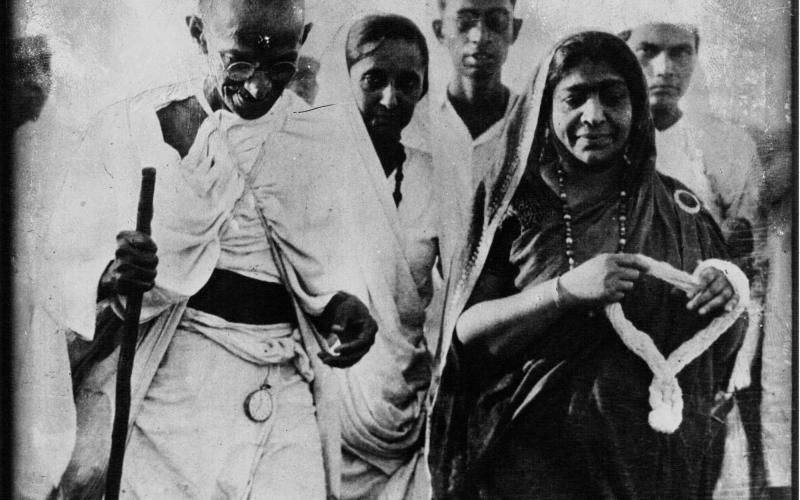
As the pace of anti-colonial protest movements picked up in the 1930s, women were in demand as demonstrators on the frontlines, but an earlier wave of frontline protests in the aftermath of the First World War had not cared to mobilize women to any significant extent. The emergence of Mohandas Gandhi, called “Mahatma” or Great Soul, a conservative cultural nationalist with a propensity for using religious rhetoric, to the forefront of politics saw a re-traditionalization of the public images of women. During the 1920s Non-Cooperation Movement, for instance, which Gandhi merged with the Khilafat agitations in which Indian Muslims protested the defeat of the Ottoman Empire and the consequent unseating of the Sultan as the supreme spiritual authority of world Islam. Women were often the target of moral resentment from people mobilizing in and around the movement. In the province of Bengal, both Muslim and Hindu agitators would harass "prostitutes" in the name of Gandhian moral purity and the need to protect the image of the nation, and since Gandhi had no cadre as yet and was reliant on already mobilized groups who had agreed for the duration of his movement to promise to be non-violent, they maintained a large degree of autonomy and local control in their interpretation of the Mahatma’s message.[3]
By the turn of the century, the case for social and sexual self-determination was being made by socialists and communists across the world, and in India, revolutionary anarchist women (often young girls) had made martyrs of themselves in individual acts of anti-British terrorism. Still, mainstream public opinion had a very different image of women. Ironically, many of Gandhi’s political tactics, such as the hunger strike or non-violent provocation, he had learned from the Suffragettes in his days as a law student in London in the 1890s, but he did not share their political goals. Nor was he, in his political language, anything less than derogatory: he indicated his contempt for parliamentary forms of government in his manifesto of 1909 in explicitly misogynist language, describing Parliament as a “barren woman” and a “prostitute.” By the 1930s, when women were a large part of his own cadre, he demanded chaste behavior from these mothers of the future nation. Among Gandhi’s dearly held “values” was a refusal to countenance the use of any artificial methods of birth control and the necessity to exercise “self-control” instead: Even within a marriage, he believed that once a couple had had a certain number of children, they should live celibate lives.
Cultural sensitivities which involved the chastity and self-restraint of Indian women did not appear to work the same way for very young girls, who were mostly unprotected from the sexual attentions of anyone they were married to. From 1891 onwards, the British colonial power imposed a minimum age of consent for Indian women, married or unmarried. That age was set at 12 in 1891 by the Age of Consent Act, intercourse with a girl younger than 12 was liable to prosecution as rape, regardless of whether a marriage had taken place; the age for the legal consummation of a marriage with a child bride was simultaneously raised from ten to 12. This bill was passed to the accompaniment of great resistance from male traditionalists defending Hindu culture, who apparently included the right to child marriage and child rape. During the discussions on the Child Marriage Restraint Act in 1929, which now sought to raise the age of marriage for girls from 12 to 14 and to set the marriageable age for boys at 18, a similar mobilization of “traditional” opinion was attempted. As before, this was seen as a great civilizational conflict, but the Act was not enforced, as the British colonial state believed that doing so would alienate both Hindu and Muslim opinion. Still, a strong mobilization around the need for the passing of the bill can be traced back to a book by an American journalist, Katherine Mayo. Her book Mother India (1927) was largely a hatchet job on a backward civilization that did not know how to treat its women.
The debates on the legislation became entangled in various polemical attacks on American civilization and cultural-nationalist defences of Indian practices. The eventual passing of the bill appears at least in part to have been seen as a victory of nationalism against imperialist-paternalist critiques. As an internal critic, Gandhi, who had made several points similar to Mayo’s himself, could not altogether disavow many of the charges. He found a way out by referring to Mayo’s book as a “drain inspector’s report”, in which she came looking for and, in so doing, found the worst in Indian civilization [4]
Women’s “Agency” and Its (Non-) Uses
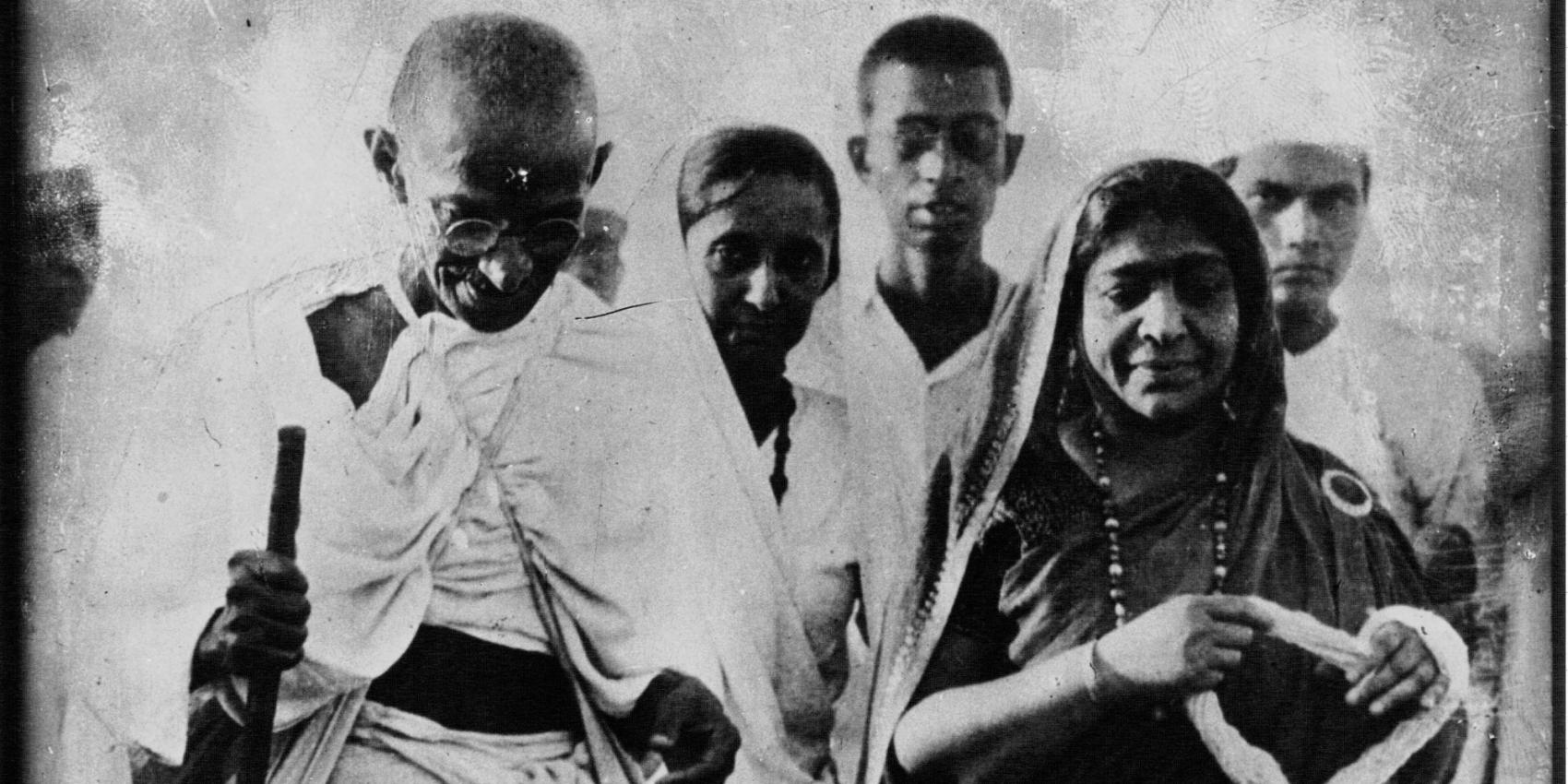
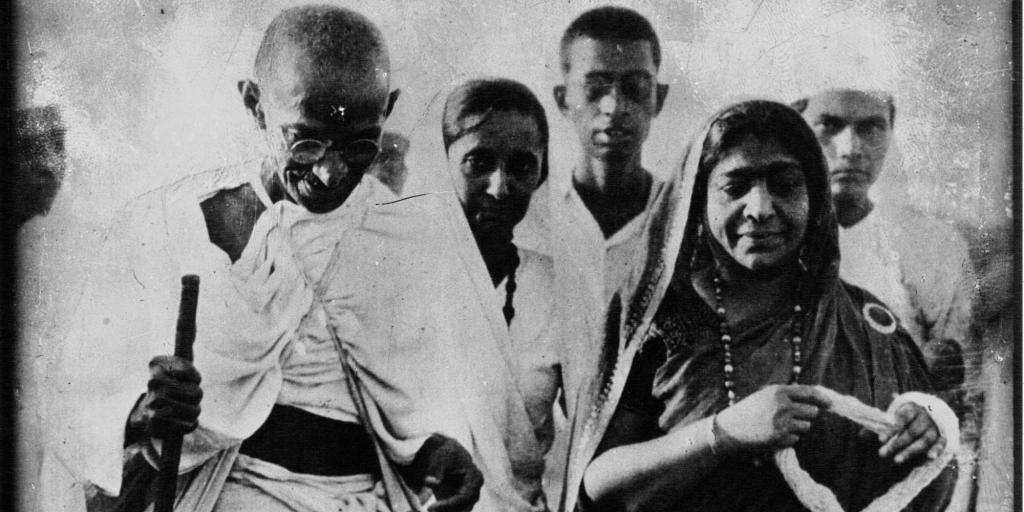
The interwar years were fraught with various contradictions: A few articulate women from affluent and well-connected political families were very visible in the public domain, and often taking the lead in describing the state of Indian womanhood to the outside world and in prescribing solutions. They were also keen to refute the idea that the advent of British colonial power had been the beginning of the process of the women's emancipation: That, they agreed, had happened already in ancient India, and it only remained for a modern India to return to the past in the future. Contradictory images and role models of Indian womanhood can be suitably viewed even within a single family: The poet Sarojini Naidu was an important female voice in the entourage surrounding Gandhi and promoted a version of the self-controlled, self-disciplined, virtuous woman: her emancipation was to be achieved through the “inalienable ancestral heritage” of “a great spiritual tradition of sacrificial devotion and spirited service.”[5] Her sister-in-law Kamaladevi Chattopadhyay, married to her brother Harindranath, was at the same time bringing the writings and ideas of the Russian revolutionary Alexandra Kollontai to the notice of Indian audiences: the right to sexual liberation, freedom to have and to change sexual partners and a recognition of the rights of an individual outside of duties to a pre-ordained collective.[6] (Another of her brothers, Virendranath, known as “Chatto”, was a close friend and confidante of Willi Münzenberg and a member of the German Communist Party, the Secretary of Rote Hilfe, the organization set up to provide legal assistance to left-wingers in trouble with the law, and a co-organiser of the 1927 Brussels Congress of Oppressed Peoples and Nationalities.)[7]
It might even seem that a more authoritarian tendency in Indian public life might offer women more "agency". Subhas Chandra Bose, soon to be a collaborator with the National Socialist regime and the Japanese Empire, suggested that women needed to be given physical training in self-defense, and to learn how to use sticks and swords – but still in the interest of defending their collective honor. Bose later recruited women to his Indian National Army, drawn from Indians living in Southeast Asia, as part of his collaboration with the Japanese forces in their attempt to invade India. Yet by the time of Indian independence in 1947, a very conservative image of Indian womanhood, which was not "Western” and used the resources of its “ancestral heritage” and “spiritual tradition", would have to come into competition with the as-yet small but articulate and often affluent minority of women in important public positions, at the United Nations, in ministerial or in diplomatic positions. And there remained an underlying uneasy reality: You do not need a right-wing movement when the mainstream (the center) is right-wing enough. These are unresolved questions in both in the imagery and iconography of womanhood in India and in the quotidian politics that accompanied them.
[1] Ritu Menon and Kamla Bhasin, Borders and Boundaries: Women in India’s Partition (New Brunswick: Rutgers University Press, 1998); Urvashi Butalia, The Other Side of Silence: Voices from the Partition of India (New Delhi: Penguin, 1998).
[2] Kamaladevi Chattopadhyay, The Status of Women in India, in the anthology Women in Modern India (Bombay: Taraporewalla, 1929), 8.
[3] Benjamin Zachariah, Mohandas Gandhi and Bengal: The View from Above and Below, in Benjamin Zachariah (ed.), The Cauldron of History (Kolkata: DM Library, 2025), 66–88.
[4] Mrinalini Sinha, Specters of Mother India (Durham: Duke University Press, 2006); Mrinalini Sinha, “Refashioning Mother India: Feminism and Nationalism in Late-Colonial India,” Feminist Studies Vol. 26, No. 5 (Autumn, 2000): 623–644.
[5] Sarojini Naidu, “Foreword” to Women in Modern India, 3.
[6] In the journal Congress Socialist, in its inaugural year in 1934.
[7] Benjamin Zachariah, “Indian Political Activities in Germany 1914–1945,” in Joanne Miyang Cho, Eric Kurlander and Douglas T. McGetchin (eds.), Transcultural Encounters Between Germany and India: Kindred Spirits in the 19th and 20th Centuries (New York: Routledge, 2013), 141–154.
Zitation
Benjamin Zachariah, The Place of Women in Colonial India: Images, Ideals, Models. The Inescapability of the Community, in: zeitgeschichte|online, , URL: https://zeitgeschichte-online.de/themen/place-women-colonial-india-images-ideals-models