
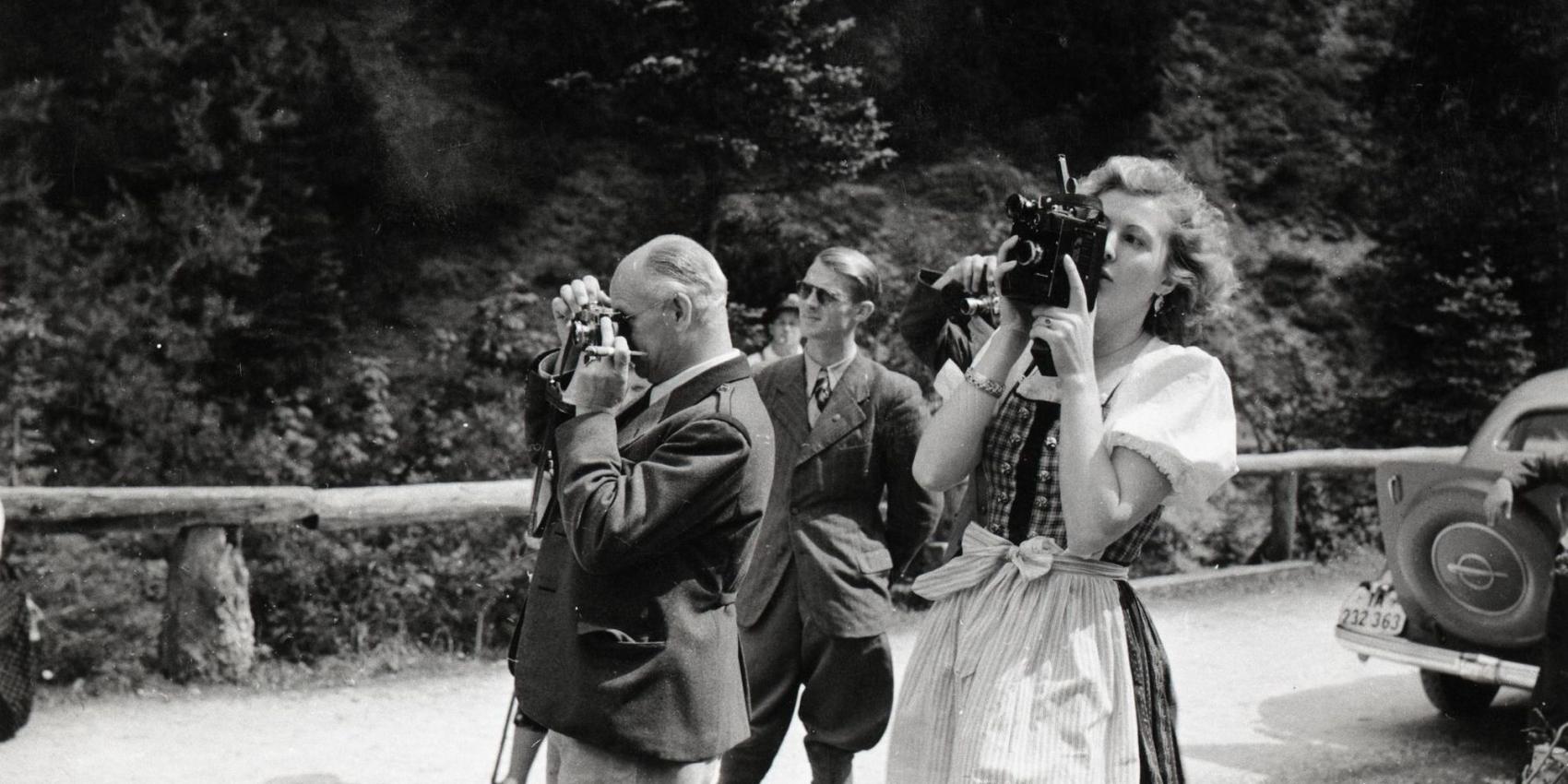

Women are still frequently perceived as marginal actors within far-right movements. Public discourse, media reporting and even prevention work often frame right-wing extremism primarily as a “men’s problem.” Yet this perception obscures the significant and multifaceted roles women have long played in far-right structures. Women are not only supporters, but also ideologues, bridge-builders, strategists and public faces of extremist campaigns. Their participation contributes substantially to the normalization and societal embedding of extreme right-wing ideologies.
A particularly striking field of activity is the instrumentalization of sexualized violence. By ethnicizing sexism and racializing perpetrators, far-right women articulate anger and fear in ways that resonate far beyond their own political milieu. In doing so, they benefit from what can be described as the principle of “double invisibility”: As women, they are underestimated politically; and as supposed defenders of women’s rights, they are often not immediately recognized as extremist actors.[1]
This article examines the modern construction of the “Volksgemeinschaft” (people’s community) in relation to gender, outlines central female roles within the contemporary far right, explains the principle of double invisibility and analyzes the instrumentalization of sexualized violence by extreme right-wing women and women’s groups.
The Modern Construction of the “Volksgemeinschaft” and Gender
The construction of an ethnically homogeneous “Volksgemeinschaft” has always been central to far-right ideology. Historically rooted in National Socialism, it remains a core ideological reference point in contemporary far-right discourse. Although today’s productions are often staged in a modern, media-savvy way and embedded in conspiracy narratives such as the so-called “Great Replacement,” the underlying logic remains continuous: A homogeneous national body must be protected against internal and external enemies.[2]
The dichotomous and hierarchical gender order forms the inner foundation of this construction. Cultural struggles against “gender mainstreaming,” alleged “gender ideology,” or the “feminization” of boys and men have long served as mobilizing issues for the far right. Gender is naturalized and reduced to a rigid binary. Femininity and masculinity are framed as biologically determined, complementary and unequal.
Within this ideological framework, women are assigned a specific “nature.” They are predestined to be mothers – not only in a biological sense but also as symbolic caretakers of the national community. The white German woman who is “worth protecting” is constructed as weak, vulnerable and in need of male protection. Simultaneously, the male guardian is portrayed as strong and decisive, embodying the protector of both women and the national body (“Volkskörper”). Female sexuality is strictly regulated in this imagination. Misconduct in matters of reproduction and sexuality is framed as a threat to the community. Constructions of femininity thus combine passivity, moral purity and availability for white German men. At the same time, women who deviate from this norm – by choosing not to have children, by embracing queer identities or by forming relationships with men marked as “foreign” – are stigmatized.
Pluralization and “Catching-Up Modernization” of Far-Right Femininities
Despite this rigid gender ideology, contemporary far-right movements have undergone processes of modernization. Over the past decades, feminist and queer struggles have challenged traditional gender roles and destabilized binary gender orders in German society. These broader social transformations have also affected the far right. Women in the far-right scene now occupy a variety of roles: They appear as Identitarian activists at the forefront of marches, as local politicians, as public intellectuals, as influencers, as ethnic settlers, as businesswomen or as “concerned” mothers and grandmothers. This development has been described as a form of “catching-up modernization.” The far right adapts stylistically and organizationally to societal changes while maintaining a rigid, biologically grounded gender ideology at its core. Prominent female intellectuals of the so-called New Right, such as Ellen Kositza and Caroline Sommerfeld, present themselves as bourgeois, educated and articulate. They publish essays in right-wing magazines and position themselves as anti-feminist critics of contemporary society.[3] They claim to defend “real” women’s interests while rejecting feminism and portraying themselves as victims of an alleged “opinion dictatorship.”
Such actors play a crucial role in the far right’s culture wars. By addressing issues like child rearing, education and “family values,” they create bridging narratives that resonate with broader conservative segments of society. The trope of protecting “our women and children” functions as a particularly powerful connector between extremist milieus and mainstream audiences.[4]
The Principle of “Double Invisibility”[5]
The concept of “double invisibility” helps explain why women in the far right are so often overlooked or underestimated. On the one hand, women are still widely perceived as less politically active than men. On the other hand, when women are politically active, they are rarely suspected of involvement in extremist or violent structures.
The case of Beate Zschäpe illustrates this dynamic. As a member of the National Socialist Underground (NSU), she played a central role in a right-wing terrorist network responsible for multiple murders. Yet for years, she was overlooked and underestimated – not only by authorities but also by civil society actors. Her presence enabled the trio to live relatively inconspicuously, benefiting from gendered stereotypes of the “apolitical girl” or “peaceful woman.”[6]
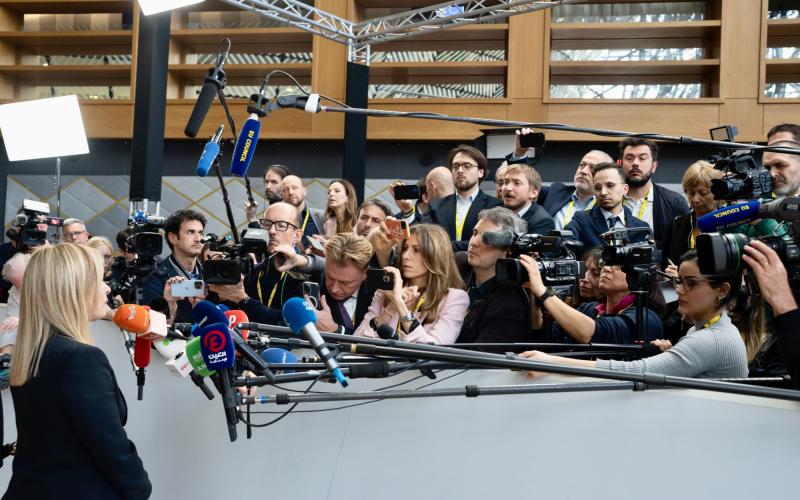
Feminist scholars have long pointed out that women are neither inherently more peaceful nor morally superior in the context of nationalism, colonialism, racism or antisemitism. Nevertheless, the cliché persists. Right-wing extremism continues to be framed as a male domain, which allows women to operate with less scrutiny and to act as mediators and normalizers. In contemporary Europe, women are increasingly visible at the forefront of far-right parties. Figures such as Alice Weidel, Giorgia Meloni and Marine Le Pen challenge the stereotype of the male-dominated far right. Within Germany’s Alternative für Deutschland (AfD), Alice Weidel presents herself as “liberal-conservative.” Despite living in a same-sex partnership, she distances herself from queer politics and opposes LGBTQ+ rights initiatives. Debates within the AfD about the definition of family – culminating in the explicit reaffirmation of “father, mother and children” as the party’s model – demonstrate the continued centrality of heteronormative family ideology.
These examples show that female leadership does not contradict far-right ideology. Rather, women can personify and legitimize it, especially when they frame their positions as protective, maternal or morally grounded.[7]
When we examine one of the most significant far-right groups of recent years – the “Identitarian Movement” (IB) – it becomes apparent that a particular form of femininity has emerged: “defensive femininity.”[8] Within the Identitarian movement, women often present themselves as stylish, modern and media-savvy. They run blogs and video channels, appearing sporty, fashionable and self-confident. At the same time, they fully endorse the movement’s reactionary family model. The concept of defensive femininity captures this phenomenon. It describes a modernized yet deeply traditional form of far-right femininity grounded in pride in one’s own womanhood. Conservative, rebellious and “modern” femininities coexist, but all are anchored in a biologistic understanding of gender and in the primacy of motherhood and the heteronormative family.
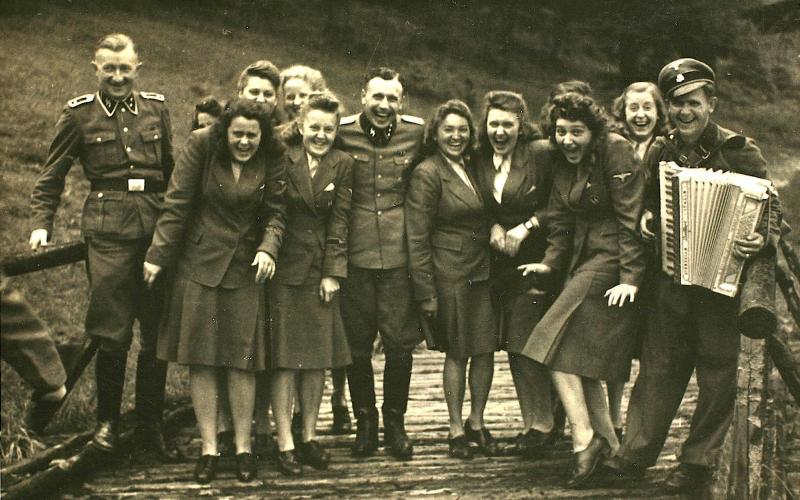
This emphasis on the female sphere – care work, child rearing, moral guidance – has historical precedents. Debates about female perpetrators during National Socialism have already highlighted how women’s supposed domesticity and moral authority could facilitate their participation in violent systems while rendering them inconspicuous.[9]
The Instrumentalization of Sexualized Violence
The field of sexualized violence has become a central arena for far-right women’s activism. Since the mass sexual assaults in Cologne on New Year’s Eve 2015–2016, right-wing actors have intensified racist campaigns that frame sexual violence primarily as a problem of migrant or Muslim men.[10] Actually some far-right female activists even refer to themselves as the “Cologne generation.” Groups such as Collectif Némésis in France or Lukreta in Germany illustrate this trend. Their activists combine militancy, sexualized self-staging and references to care and motherhood. Alice Cordier, founder of Collectif Némésis, embodies this mixture of assertiveness and maternal rhetoric. These campaigns are based on the deeply rooted “myth of the assaulting stranger.” Historically, different groups – Jews, “wanderers,” Black men, and today especially Muslim or refugee men – have been constructed as sexual threats. Racism and sexism intertwine: Misogyny and sexual violence are externalized onto the “other,” while structural violence within majority society is minimized or denied.
By framing women’s rights as already achieved within the “civilized” national community and demanding compliance only from racialized outsiders, far-right actors obscure the structural and power-laden dimensions of sexualized violence. The myth resonates strongly in a society where rape myths are widespread and where many women experience sexualized harassment or violence as part of everyday life.
Right-wing female influencers amplify these narratives online. At first glance, their profiles resemble lifestyle or parenting blogs. Only upon closer inspection do extremist, racist orientations become visible through specific hashtags and networks. Their content targets young women in particular, addressing fears and experiences of sexualized violence while redirecting anger toward racialized “others.”
Conclusion
Women play a central and multifaceted role in contemporary far-right movements. Through processes of stylistic modernization, they have diversified their modes of appearance while maintaining a rigid, biologically grounded gender ideology. The principle of double invisibility allows them to operate under the radar and to function as bridge-builders to the center of society.
The instrumentalization of sexualized violence is especially effective because it draws on real experiences of fear and victimization while externalizing responsibility onto racialized groups. In doing so, it normalizes racist and anti-democratic positions.
To counter this development, sexualized violence must be recognized and addressed as a structural problem rooted in power relations and gender hierarchies. Only by acknowledging its societal dimension can its exploitation by far-right actors be effectively challenged.
[1] Christiane Leidinger, “Nicht ernsthaft feministisch, aber als rassistisch ernstzunehmen. (Extrem) rechte Aktivitäten von Frauen zu sexualisierter Gewalt,” Politikum, 1 Kampfzone Antifeminismus (2026): 22–28.
[2] Esther Lehnert, “Angriff auf Gender Mainstreaming und die Homo-Lobby. Der moderne Rechtsextremismus und seine nationalsozialistischen Bezüge am Beispiel der Geschlechterordnung, in Robert Claus, Esther Lehnert and Yves Müller (eds.), Männlichkeiten und Rechtsextremismus (Berlin: Dietz Verlag, 2010), 89–99.
[3] Nellie Sittig, “Ellen Kositza: Gender ohne Ende,” in David Meiering (ed.), Schlüsseltexte der ‘Neuen Rechten.’ Kritische Analysen antidemokratischen Denkens, Edition Rechtsextremismus (Wiesbaden: Springer Fachmedien, 2022), 333–343.
[4] Eviane Leidig, The Women of the Far Right. Social Media Influencers and Online Radicalization (New York: Columbia University Press, 2023).
[5] Esther Lehnert, “Parteiliche Mädchenarbeit und Rechtsextremismus-Prävention,” in Amadeu Antonio Stiftung and Heike Radvan (eds.), Gender und Rechtsextremismus-Prävention (Berlin: Metropol Verlag, 2013), 197–210.
[6] Ulrich Overdieck, “Fallgeschichte 1, Beate Zschäpe,” in Rechtsextreme Frauen – übersehen und unterschätzt. Analysen und Handlungsempfehlungen, ed. Amadeu Antonio Stiftung/Fachstelle Gender und Rechtsextremismus (Berlin: Amadeu Antonio Stiftung, 2014), 35–44.
[7] Ursula Bitzegeio and Cécile Calla, “Rechtsextreme Spitzenpolitikerinnen in Italien, Frankreich und Deutschland,” in Triumph der Frauen? Das weibliche Antlitz des Rechtspopulismus und -extremismus in ausgewählten Ländern Europas, ed. Friedrich Ebert Stiftung (Bonn: Friedrich Ebert Stiftung, 2025).
[8] Julia Haas, “Anständige Mädchen” und “selbstbewusste Rebellinnen.” Aktuelle Selbstbilder identitärer Frauen (Hamburg: Martha Press, 2020).
[9] Claudia Koonz, Mütter im Vaterland. Frauen im Dritten Reich (Freiburg im Breisgau: Kore Verlag, 1991).
[10] Gabriele Dietze, “Ethnosexismus. Sex-Mob Narrative um die Kölner Sylvesternacht,” (2016) https://journals.uni-goettingen.de/movements/article/view/2449/2485 (last accessed: 07.06.2026).
Zitation
Esther Lehnert, Women and the Far Right. Gender, “Volksgemeinschaft” and the Instrumentalization of Sexualized Violence, in: zeitgeschichte|online, , URL: https://zeitgeschichte-online.de/themen/women-and-far-right
.jpg)