This text discusses women as (voluntary) Nazi perpetrators and beneficiaries as well as the approach taken by the post-war feminist movement in Germany and Austria to this phenomenon. I am particularly interested in the female victimhood myth, the idea that women suffer from patriarchy just like the Jews. Finally, are there elements of a specifically feminist antisemitism? This text is driven by the logic that we need to ask even the most painful questions in order to contribute to feminist causes in meaningful ways rather than focus primarily on positive identification with resistance or resilience.
Women as Nazi Perpetrators
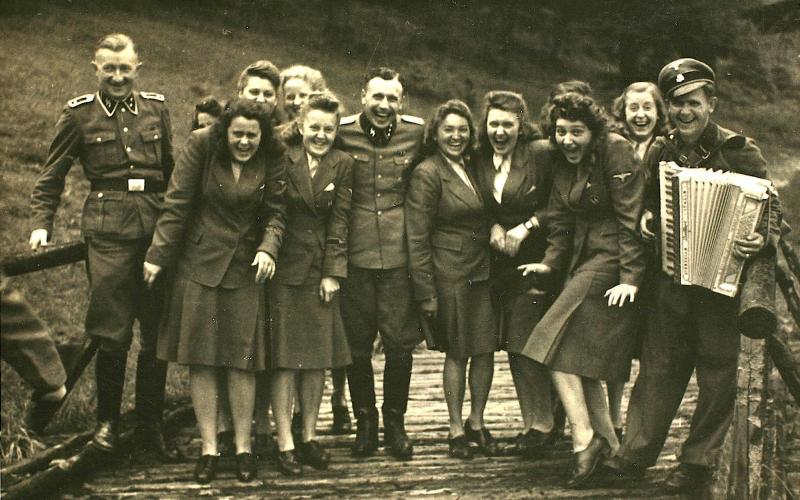
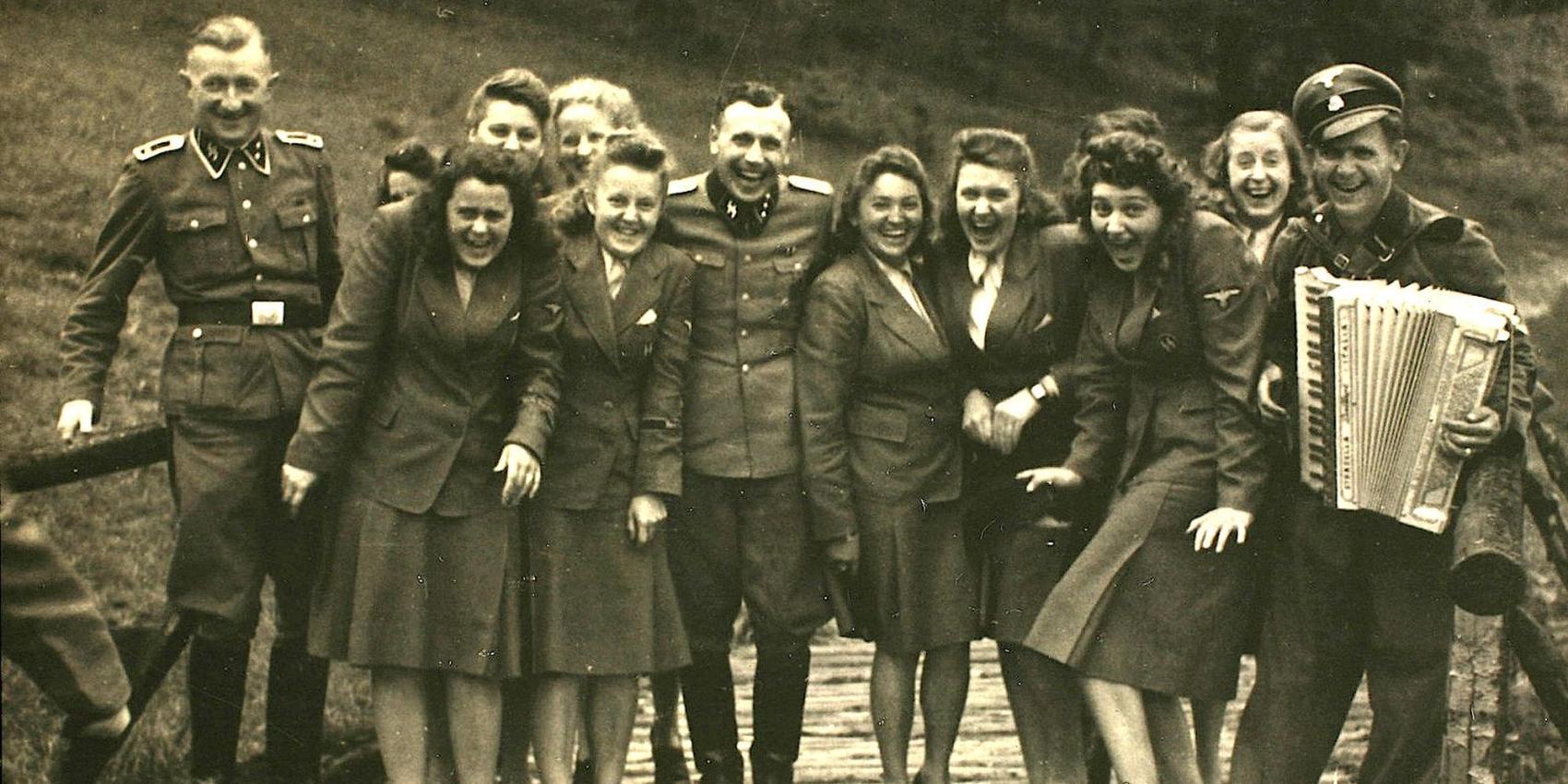
Despite the fact that female Nazi perpetrators were a marginalized topic for decades after World War II, today there is plenty of research about their different historical roles. What particularly interests me are acts by women taken on their own initiative which cannot be explained (away) by the mere fact that they were following orders.[1] Women volunteered for training at the Ravensbrück concentration camp to become camp guards all over the Nazi-ruled territories. At the end of the war, when no orders from above were coming through, they, on their own accord, organized death marches following the antisemitic logic that Jewish women were to receive the least food and clothing. Welfare workers argued that it was inappropriate to visit “Aryans” after breathing the air in a Jewish apartment and fought for separate procedures. When it comes to denunciation, up to 30 % of the people who endangered their neighbors or colleagues by reporting them were women. Women also openly profited from antisemitic raids, for example during the “Anschluss” pogrom in Vienna in March 1938.
Relative Emancipation under Nazi Auspices
Official Nazi propaganda undoubtedly emphasized the role of the mother, but Nazi rule also brought about new ways to break out of the female role. The private sphere was also placed under the auspices of Nazi policy through the dedication of the women themselves. Women were able to make themselves useful to the national community through their (antisemitic and racist) commitment and partly freed themselves from dependence on their husbands and fathers. Their scope of action expanded significantly toward “relative equality,” especially as adolescents and young women and in the labor market. Through the cult of motherhood in the Nazi era, motherhood and housework were professionalized in a unique manner and allowed women to work outside the home. Female employment, especially that of married women and mothers, had steadily increased since 1933, i.e. also before the war. During the war, soldiers’ wives had 80% of their husbands’ pre-war salaries at their disposal while the latter were “in full board with the Wehrmacht.”[2] Numerous peasant women had power over forced laborers assigned to them. The widespread image of the suppression of women from professional life during the Nazi era has thus been proven wrong.
Sexuality in National Socialism
Dagmar Herzog has confronted us with the difficult fact that sexuality could be fun for “Aryans” during the Nazi era.
“The Third Reich was a huge undertaking to control reproduction. By means of forced sterilizations, abortions and murder, it prevented the reproduction of all those who were branded as not conforming to racial criteria and promoted the production of ‘Aryan’ offspring. Nevertheless, the obviously brutal aspects of Nazi sexual policy were not embedded in an overall anti-sexual attitude. Rather, the majority of Germans at that time were spurred on and encouraged to seek and experience sexual pleasure.”[3]
She clarified that National Socialists were
“divided on sexual morality; some undoubtedly wanted to return to conservative values and behaviors.… However, many other spokesmen and Nazi authors worked to overturn the association of emancipatory advances with ‘Marxism’ or ‘Judaism’ and to redefine sexual liberation as a ‘Germanic’ or ‘Aryan’ privilege.”
Premarital and extramarital sexual intercourse among Aryans was supported. Other contraceptives were banned, but widespread use of condoms is documented. Herzog writes about the Bund Deutscher Mädel (BDM):
“In 1934, the leaders of the Bund Deutscher Mädel (BDM) had received instructions marked ‘top secret’ to encourage the young girls recommended to them to have premarital sexual intercourse. As early as 1935, it was an open secret what was going on in some BDM groups.”
Furthermore, a common Nazi sex guide emphasized the importance of orgasm for women as well as for men and pointed out to its readers the excitability of the clitoris. Herzog concludes:
“One of the main effects of the ‘normalization process of the fifties’ was that the sex-friendly sides of National Socialism were forgotten. Admitting to one’s own children or the rest of the world that one had found pleasure in the Third Reich contradicted the most successful tactics of the post-war Germans in dealing with their guilt.”
Feminist Misinterpretation of Sexuality in National Socialism
To this day, changes in gender relations in National Socialism are often seemingly intuitively attributed – without reference to historical sources – to the official Nazi glorification of women as mothers, which allegedly exclusively desexualized women and overemphasized the role of discipline and obedience.
“Although the Third Reich was a patriarchal state based on the unequal treatment of the sexes, the woman here, insofar as she was of Aryan origin, experienced a certain kind of appreciation.… She thus became the ‘bearer of the species,’ responsible for the purity of the German blood, the ‘hereditary current’ and the German race. For this purity, the Aryan woman had to be clean, decent and disciplined, a good housekeeper and faithful wife. The female body was thus upgraded, the mother was made godlike as the ‘guardian of the blood,’ but at the same time desexualized and subjected to biological expediency.”[4]
They continue in this historically untenable way:
“The female body thus became the political field par excellence for racial politics. This is also evident in the ideas about the sexuality of the Aryan woman. For the woman, on the one hand, it was important to protect her body – for this pleasure and sensuality should be kept under control. They should not be subject to individual enjoyment, but to the task of population policy.”
The German “New Women’s Movement” until the 1980s
The German author Renate Wiggershaus portrayed female perpetrators as “birthing machines and ... overseer/guard machines.” Feminists depicted denunciations not as politically motivated, but in weird constructs as protection against sexual violence. Margarete Mitscherlich constructed the “peaceful woman” not as antisemitic or racist, but as a victim herself, who acts out of fear of losing love. In the 1980s, the myth of women exclusively as victims was still dominant in the German-speaking countries. Some feminist theorists ascribed a natural resistance to the female being and simply denied any perpetration: Annette Kuhn, for example, painted the picture of evil raging outside and the female “dissident women's culture” living inside. Gerda Szepansky described the female struggle for survival as “inherently resistant;” because the struggle for survival is considered a fight against war, opposition to war is in turn resistance against the system.
Women in the Nazi era were often misrepresented exclusively as victims.
“In 1933, women found themselves in a situation in which they had already internalized and accepted the basis of patriarchal argumentation. From this position, the misogynistic National Socialist ideology and politics could be misunderstood as the dawn of a time of ‘equality’ and ‘honoring’ of women. In this way, the victims could become stooges [Handlanger] of the perpetrators.”[5]
The peak of this argumentation was a victim-perpetrator reversal typical for post-Holocaust antisemitism. The journal Schlangenbrut declared 1988 as the year of the Holocaust of women, defined as the “destruction of our self-consciousness, the fear that still burns in us today as a consequence of patriarchy.”[6] While ignoring the topic of female Nazi perpetrators, women portrayed themselves as Holocaust victims.
Rare critical voices such as Lerke Gravenhorst asked, in contrast, why Nazism had not been claimed as a “negative property” by feminists. She criticized that by focusing on the morally determined paradigm of “oppression” and not on “participation,” only positive property had been claimed. Finding and inventing a female world to overcome women’s oppression becomes “wrong if it is supposed to provide the foil for the history of women in and from Germany.”[7]
Feminist Antisemitism?
Female researchers of the matriarchy were by no means representative for the feminist movement. And yet, it is remarkable how consistently they blamed Judaism for ending an alleged matriarchal system that they claimed had ruled before.[8]
“The history of the ‘chosen people’ has an exemplary character for our modern problems: detached from its primordial ground, these people are abandoning the tolerant worldview of its mothers, demonizing the all-pervading love of the matriarchal religion, splitting destructive aggression and fighting for supremacy in the Middle East with a brutal ‘extermination program.’ On the flip side of power, powerlessness awaits. Israel is devastated and ceases to exist as a state. We can understand this path as a lesson that shows how the total claim to power must lead to disaster and complete annihilation.”[9]
In this projection, the Jews are detached from their primordial ground, which is an antisemitic projection of rootlessness. Not the antisemites, but the Jews are allegedly splitting destructive aggression and are themselves to blame for their destruction, an argument which combines post-Holocaust antisemitism with feminist thought.
Hanna Wolff offered another variant: Anyone who knows relevant literature on the “sickening [=Jewish] image of God” “is no longer surprised by war atrocities, concentration camps, the Holocaust and the latest excesses, but rather feels painfully compelled to consider the relationship of such perverse violence to the sickening image of God.”[10] Those who are blamed for ending matriarchy are thus claimed to have brought the Holocaust upon themselves.
Beyond this fringe movement, Charlotte Kohn-Ley critically concludes:
“An in-depth examination of the development of the feminist movement after 1968 shows that anti-fascism and anti-Zionism became an ideological basis. All feminist efforts moved more or less on this binding basis: groups within feminist theology, matriarchal studies, left-wing groups, the feminist peace movement, ecologists and women who campaigned for the Third World were of course anti-fascist anti-Zionists.”[11]
At international and national women’s conferences since the end of the 1960s, Zionism has been declared to be the worst racism and equated with Nazism. Phyllis Chesler brings the example of a UN conference (in preparation for the UN World Conference on Women) in Copenhagen in 1980, at which “the entire agenda, both official and unofficial, was occupied by the PLO.”[12] An Arab Jew who wanted to talk about the torture and execution of her husband in Iraq was silenced, as was a Pakistani woman who wanted to talk about the Afghan refugee tragedy. The result of the meeting was a UN action plan in which Zionism was declared one of the greatest evils in the world, in addition to racism, colonialism and apartheid.[13] Phyllis Chesler concluded: “That was my first postmodern ‘pogrom’.”[14]
Conclusion
While antisemitic matriarchal researchers were by far not the feminist mainstream, the dominance of the idea that Judaism is a particularly patriarchal religion and that women thus cannot be Jewish and feminist, as many Jewish women were told over and over again,[15] can be considered as a specifically feminist antisemitic argument. Since other religions are just as patriarchal, singling out Judaism in this regard is mere projection.
When it comes to the question which psychological needs antisemitism fulfills, we can say that such projections work the same way for men and women, only the needs they satisfy differ according to the different gender roles.
“The antisemitic girls show a conventional female façade and are full of aggression behind it. The antisemitic man sees himself as masculine, aggressive and hard-boiled; but behind it lies the desire for passivity and dependence. His striving for power awakens the desire to be ‘up with the strong;’ at the same time, he satisfies his tendency to submit by becoming the right-hand man of some powerful male figure.”[16]
In a society in which women are still consciously or unconsciously raised to be the peaceful gender, antisemitic violence against Jews during Nazism allowed them to be aggressive in a way welcomed by society. Even today, when it is mostly not about physical violence, the projection mechanisms work in the same way.
[1] For detailed references see Ljiljana Radonić, Die friedfertige Antisemitin. Kritische Theorie über Geschlechterverhältnis und Antisemitismus (Vienna: Peter Lang, 2004).
[2] Götz Aly, “Schulden, Volk und Raubkrieg 1939,” Berliner Zeitung, September 1, 2015, https://www.berliner-zeitung.de/22668410 (last accessed: 07.06.2026).
[3] Dagmar Herzog, Die Politisierung der Lust. Sexualität in der deutschen Geschichte des 20. Jahrhunderts (Munich: Psychosozial Verlag, 2005), 16. All translations from German are mine.
[4] A. G. Gender-Killer, “Geschlechterbilder im Nationalsozialismus. Eine Annäherung an den alltäglichen Antisemitismus,” in A. G. Gender-Killer (ed.), Antisemitismus und Geschlecht. Von “maskulinisierten Jüdinnen”, “effeminierten Juden” und anderen Geschlechterbildern, (Münster: Unrast Verlag, 2005), 29.
[5] Marianne Lehker, Frauen im Nationalsozialismus. Wie aus Opfern Handlanger der Täter wurden – eine nötige Trauerarbeit (Frankfurt am Main: Materialis Verlag, 1984), 93.
[6] As quoted in Susanne Heschel, “Konfigurationen des Patriarchats, des Judentums und des Nazismus im deutschen feministischen Denken,” in Charlotte Kohn-Ley and Ilse Korotin (eds.), Der feministische “Sündenfall”? Antisemitische Vorurteile in der Frauenbewegung (Vienna: Picus Verlag, 1994), 167.
[7] Lerke Gravenhorst, “Nehmen wir Nationalsozialismus und Ausschwitz ausreichend als unser negatives Eigentum in Anspruch? Zu Problemen im feministisch‐sozialwissenschaftlichen Diskurs in der Bundesrepublik Deutschland,” in Lerke Gravenhorst (ed.), Töchter fragen (Freiburg i. Br.: Kore Verlag, 1990), 17–37, here 18.
[8] See Ljiljana Radonić, Die friedfertige Antisemitin reloaded? Weibliche Opfermythen und geschlechtsspezifische antisemitische “Schiefheilung“ (Graz: Clio, 2018).
[9] Gerda Weiler, Ich verwerfe im Lande die Kriege. Das verborgene Matriarchat im Alten Testament (Munich: Verlag Frauenoffensive, 1984), 33.
[10] Hanna Wolff, Neuer Wein – Alte Schläuche. Das Identitätsproblem des Christentums im Lichte der Tiefenpsychologie (Stuttgart: Radius, 1981), 178.
[11] Charlotte Kohn-Ley, “Antisemitische Mütter – antizionistische Töchter?” in Charlotte Kohn-Ley and Ilse Korotin (eds.), Der feministische “Sündenfall”? Antisemitische Vorurteile in der Frauenbewegung, (Vienna: Picus Verlag, 1994), 2018.
[12] Phyllis Chesler, Der neue Antisemitismus. Die globale Krise seit dem 11. September (Berlin: Schwartzkopf Buchwerke, 2004), 59.
[13] UN, Programme of Action for the Second Half of the United Nations Decade for Women: Equality, Development and Peace, (New York, 1980), 3, https://digitallibrary.un.org/record/14502/files/A_CONF.94_34-EN.pdf (last accessed: 07.06.2026).
[14] Chesler, Der neue Antisemitismus, 59.
[15] Leah C. Czollek, “Sehnsucht nach Israel,” in Maria del Mar Castro Varela et al. (eds.), Suchbewegungen. Interkulturelle Beratung und Therapie (Tübingen: DGVT, 1998), 42.
[16] Else Frenkel-Brunswik and R. Nevitt Sanford, Die antisemitische Persönlichkeit. Ein Forschungsbericht. in Ernst Simmel (ed.), Antisemitismus (Frankfurt am Main: Taschenbuch Verlag, 1993), 119–147, here 144.
Zitation
Ljiljana Radonić, Female Perpetrators and Antisemitic Projections, in: zeitgeschichte|online, , URL: https://zeitgeschichte-online.de/themen/female-perpetrators-and-antisemitic-projections